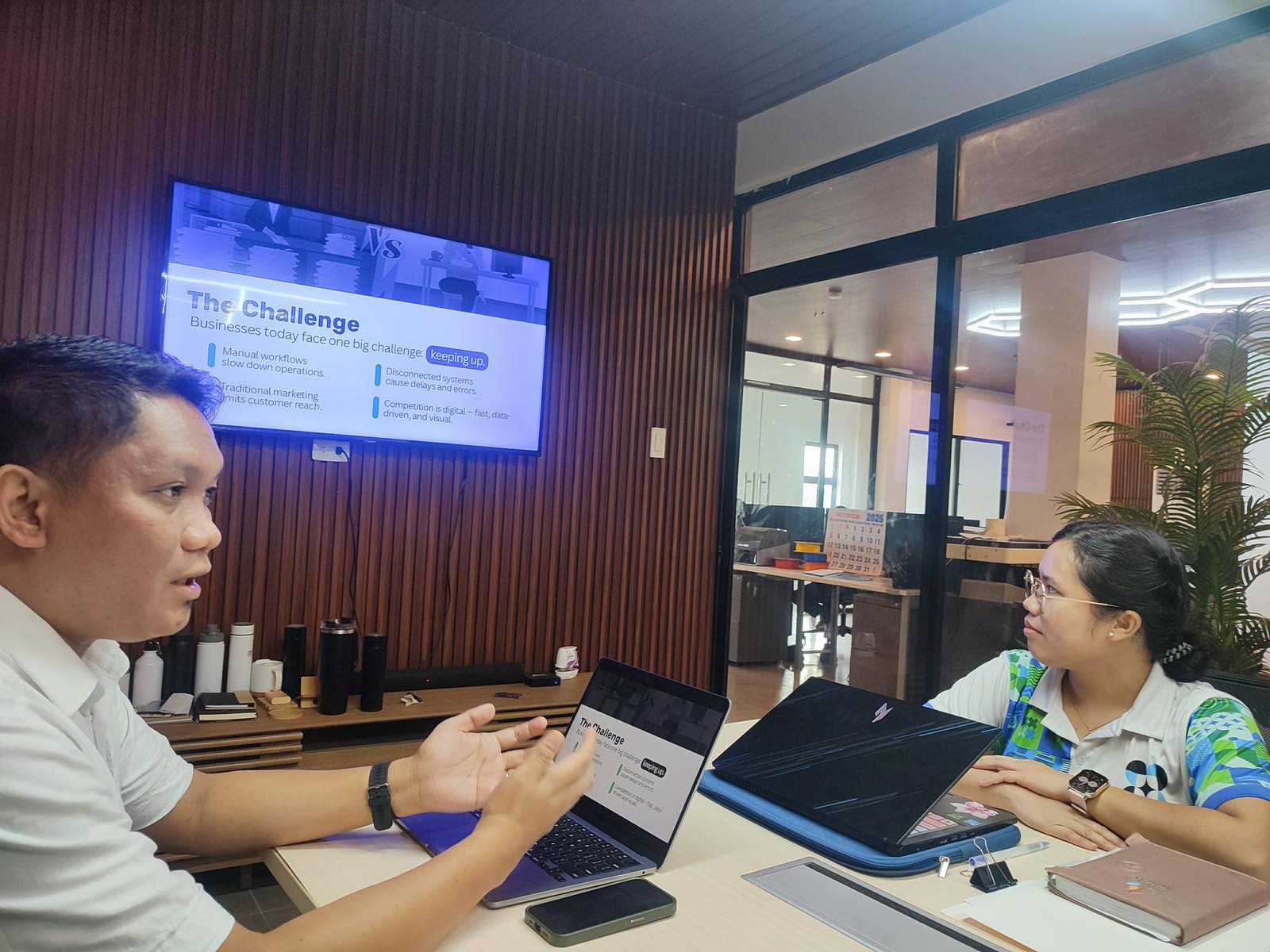
SJL Corporation is currently experiencing operational inefficiencies caused by fragmented systems, manual workflows, and a lack of data integration across its departments and branches.
Sales transactions originate from multiple channels—walk-in clients, Facebook Messenger, phone calls, and referrals—but are recorded manually or in disconnected formats. Job orders are inconsistently documented, leading to delays, duplication, and occasional miscommunication between sales, design, and production teams.
In the production floor, there is no unified system to track work-in-progress (WIP), machine utilization, or production timelines. This limits the company’s ability to manage peak workloads and optimize turnaround time.
Inventory management is also largely manual. Materials such as fabrics, inks, tarpaulins, and consumables are not systematically linked to actual production output. This creates difficulties in tracking wastage, forecasting demand, and ensuring stock availability across branches.
From a financial perspective, Accounts Receivable (AR), Accounts Payable (AP), and sales reporting are handled through spreadsheets and manual consolidation. This results in delays in financial reporting, limited visibility of branch performance, and increased risk of errors.
Customer experience is another critical concern. Clients currently rely on manual follow-ups via Messenger or phone calls to check order status. There is no online portal, automated notification system, or centralized customer database to track client history or repeat transactions.
At the leadership level, decision-making is largely based on experience rather than real-time data. The absence of integrated dashboards prevents management from accessing timely insights on sales trends, production efficiency, inventory levels, and profitability.
In my assessment of SJL Corporation (Purple Haze Designs), a growing printing and customization enterprise based in Iloilo City, I observed a familiar pattern among scaling MSMEs—strong operations, loyal customers, but systems that have not kept pace with growth. As the company expanded its services and multi-branch operations, inefficiencies became more evident across core functions, particularly in sales, production, inventory, and finance. Sales transactions originated from multiple channels such as walk-ins, Facebook Messenger, and referrals, yet these were recorded manually or in fragmented formats. Job orders were inconsistently documented, resulting in delays, duplication, and coordination gaps between sales, design, and production. Inventory management remained largely manual, with no clear linkage between materials consumed and actual production output, limiting visibility and control. Financial processes, including Accounts Receivable (AR), Accounts Payable (AP), and sales reporting, relied on spreadsheets and manual consolidation, restricting real-time insights and increasing the risk of errors. On the customer side, engagement was still dependent on manual follow-ups, with no centralized system for order tracking or customer profiling.
From a systems perspective, these issues pointed to deeper root causes—lack of integration, absence of digital governance, and limited use of data for decision-making. The impact was clear: reduced operational efficiency, constrained scalability, inconsistent customer experience, and limited strategic visibility for management. Addressing these challenges required more than incremental fixes. It demanded a structured and integrated digital transformation approach.
In my engagement with SJL Corporation (Purple Haze Designs), I observed a strong and growing enterprise that had built its market through quality service and operational discipline, yet was constrained by fragmented systems and manual processes. As the company expanded its multi-branch operations and diversified service lines, the lack of integration across sales, production, inventory, and finance began to slow down decision-making, reduce efficiency, and limit scalability. This case study was undertaken to examine how SJL could transition from its Emerging Digital Maturity Level toward a fully integrated, data-driven organization through a structured digital transformation approach. The study assessed existing workflows, identified root causes of inefficiencies, and designed a practical solution anchored on integrated systems such as ERP, CRM, and a centralized job order platform. Using a Design Science Research approach and grounded in real operational data, the outputs included a clear transformation roadmap, process redesign, and a governance framework that SJL could realistically implement. More importantly, the case aimed to produce a replicable model for MSMEs in Western Visayas—demonstrating that digital transformation is not merely a technology upgrade, but a strategic move to enable growth, improve service, and build a more resilient enterprise.
The recommended interventions include the following:
Ultimately, this proposal reinforced a key insight I often share: digital transformation is not just about deploying systems—it is about enabling the business to operate better, serve customers more effectively, and scale with confidence. For SJL Corporation, the opportunity is clear—to evolve from a strong operational business into a fully integrated, data-driven enterprise ready for the next level of growth.